Showing posts with label Theological Insights. Show all posts

Friday, April 1, 2011

Catholic Perspective on Love Wins: Part 3 What Rob Bell Says about Hell

Note: I'm currently reading Rob Bell's new and extremely popular book Love Wins. I will be posting reviews on various sections of the book as I read them while giving a Catholic perspective to the questions he poses. 

Other posts on Love Wins
Intro
Part 1--On Salvation

Part 2--On Heaven


--
A lot has been said about Rob Bell's view on hell. So much has been said it is hard for the common person hoping to get a summary of the issue to figure it all out. Even in the book itself, Bell is sometimes more concerned about telling stories and adding insights rather than a systematic argument.


In this post, I wanted to briefly cover what Rob Bell says about hell in his book (and what he doesn't say), why and how he makes these claims, and then give some resources what can help someone get a feel for the conversation around the issue. I'll give some Catholic perspective along the way as well.


What does Rob Bell say about hell?


There are many controversial aspects of the book, but the main one is this: Rob Bell makes the case that hell exists, but that it is only temporary (the majority of this argument comes in chapters 3 and 4). He believes that eventually everyone will be saved over time whether they accept the love of God in this life or the next. In Bell's words: "The love of God will melt every hard heart, and even the most 'depraved sinners' will eventually give up their resistance and turn to God." For Catholics, this is similar to what we believe about Purgatory, but Bell has transferred the concept to hell. (Catholics believe that everyone that goes to Purgatory eventually goes to heaven, but those in hell stay there--CCC 1030-1031).


Why and how does Rob Bell say this about hell?
Overall, Rob's main argument is the very character of God. 


He asks questions pertaining to: Who is God? What does God want? Does God get what he wants?


Who is God?
Bell feels that the idea of hell puts God's character on the line. Bell states, "God is loving and kind and full of grace and mercy--unless there isn't confession and repentance and salvation in this lifetime, at which point God punishes forever. That's the Christian story, right?" In sum, Bell echos the modern question that many modern men and women have: How can a loving God send people to hell forever?


Bell uses much of Chapter three to make a Scriptural case for God to redeem mankind. Specifically, he points out God's punishment of Israel and other nations only to later redeem them. For instance, Jeremiah 32: "I will surely gather them from all the lands where I banish them in my furious anger and great wrath; I will bring them back to this place and let them live in safety." He also explores the meaning and concepts behind hell in the Bible. Specifically, he questions the words that we translate into eternal.


What does God want?
God's goal is to save all people. He shows a number of passages to back this up. Here are two:


"God wants all people to be saved and to come to a knowledge of the truth" (1 Timothy 2)
"Every knee should bow...and every tongue acknowledge that Jesus Christ is Lord" (Philippians 2).


Does God get what he wants?
Bell asks: "Does this magnificent, mighty, marvelous God fail in the end?"


Will "all the ends of the earth" come, as God has decided, or only some?...Will God shrug God-size shoulders and say 'You can't always get what you want?"


First Reaction
My first reaction is that Bell is asking some fantastic questions about God. And, I think it is important not to avoid them. We must applaude him for this even if we don't agree with everything he says. These are the questions of the modern man and woman. Addressing them helps to bring Christianity to the discussion table.


Bell makes the point:
"Because if something is wrong with your God,
if your God is loving one second and cruel the next,
if your God will punish people for all of eternity for sins
committed in a few short years,
no amount of cleaver marketing
or compelling language
or good music
or great coffee
will be able to disguise 
that one, true, glaring, untenable, unacceptable, awful reality."


Second Reaction
It is important to realize that Bell is speculating this opinion rather than saying that it is an absolute truth that he knows. In the book he says: 
"Will everybody be saved, or will some perish apart from God forever because of their choice? Those are questions, or more accurately, those are tensions we are free to leave fully intact. We don't need to resolve them or answer them because we can't, and so we simply respect them, creating space for the freedom that love requires."


This quote shows that his overall argument is a lot more tame than most probably realize. I think this gets lost in the book and I think Bell could have done a better job of noting this. I think his overall goal is a conversation about the topic. But, in the end, I think most people are left with an argument because of the way that it is presented.


Third Reaction
What does the Catholic Church teach (and not teach) about this topic and what do I believe?


A few things:
1. Once in hell always in hell (CCC 1031)
2. We don't have to believe that anyone is in hell (We aren't God so we don't know).
3. We can hope that no one is.


Okay, so the Church teaches a lot more than this, but I won't cover everything here. It is funny because for all of Bell strong language, it seems like in the end he would agree with the Catholic theologian Hans Urs von Balthasar who would say we should hope that no one is in hell, but we don't know for sure (similar to Bell's quote above). Maybe, von Balthasar would have sold more copies if he had been able to make a trendy and controversial video and if he had lived in the era of twitter and blog controversy.


Bell is correct to point out all of the tensions. And, in the end, personally I feel left with tensions and not definitive answers.


I am satisfied with trusting in the justice of God for every human being. I think Bell's point is to shed light on the fact that modern men and women aren't.


Other Resources on Rob Bell's Book:
Fr. Robert Barron -- Catholic blogging priest
Darrell Bock -- Protestant Scripture scholar and editor of Christianity Today
Mark Discoll -- Popular Protestant pastor


--


What are your thoughts? Have you read the book? What opinion do you subscribe to?


Saturday, March 26, 2011

Catholic Perspective on Love Wins by Rob Bell -- Part 2 Heaven

Note: I'm currently reading Rob Bell's new and extremely popular book Love Wins. I will be posting reviews on various sections of the book as I read them while giving a Catholic perspective to the questions he poses. 

Other posts on Love Wins
Intro
Part 1--On Salvation
Part 3 -- On Hell

Chapter 2 is called Here is the New There.

The key question in the chapter: Are there other ways to think about heaven, other than as that perfect floating city hanging suspended there in the air above that obvious red and black realm with all that smoke and steam and hissing fire?

Overall, I agree with most of this chapter (there are some minor things that I don't totally buy into to). Because of their significance, I will just review the areas of agreement with Catholicism.

Area of Agreement #1--Heaven on Earth

The overall thesis of this entire chapter is that ultimately heaven will be here on earth (as alluded to in the title). Bell uses many of the images from the prophets and teachings from Jesus about the age to come to show, "It's here they were talking about, this world, the one we know--but rescued, transformed and renewed."

"When we talk about heaven, then, or eternal life, or the afterlife--or any of that--it's important that we begin with the categories and claims that people were familiar with in Jesus' first-century Jewish world. They did not talk about a future life somewhere else, because they anticipated a coming day when the world would be restored, renewed, and redeemed and there would be peace on earth."

Bell notes Revelation 21, which is an image of the end of the world, and how "God's dwelling place is now among the people."

Heaven on earth is a very Catholic concept. Catholics believe that Jesus set up His kingdom here on earth. While still not heaven, the kingdom is an image of what is to come and we are supposed to be living out heaven on earth.

Catechism of the Catholic Church: "The Church is ultimately one, holy, catholic, and apostolic in her deepest and ultimate identity, because it is in her that "the Kingdom of heaven," the "Reign of God," already exists and will be fulfilled at the end of time...Then all those he has redeemed and made "holy and blameless before him in love," will be gathered together as the one People of God, the "Bride of the Lamb," "the holy city Jerusalem coming down out of heaven from God, having the glory of God" (CCC 865).

Bell states that this perspective isn't just theoretical. It has huge implications for what we do here on earth.  He observes, "It often appears that those who talk the most about going to heaven when you die talk the least about bringing heaven to earth right now, as Jesus taught us to pray: 'Your will be done on earth as it is in heaven.' At the same time, it often appears that those who talk the most about relieving suffering now talk the least about heaven when we die."

Is this why Catholic never talk about heaven? On a serious note, it does explain Catholics strong sense of social action. No other religious or non-religious organization does more humanitarian aid each year. We specifically take the earth seriously in our teachings as well. The Pope has put solar panels on the Vatican and purchased forest space in order to offset the Vatican's carbon footprint. Not to just be green, but to reflect Catholic teaching about an earthly heaven and a renewal of the earth.

Compare Bell's quote to the Catechism quote that follows: "A proper view of heaven leads not to escape from the world, but to full engagement with it, all with the anticipation of a coming day when things are on earth as they currently are in heaven."

"Far from diminishing our concern to develop this earth, the expectancy of a new earth should spur us on, for it is here that the body of a new human family grows, foreshadowing in some way the age which is to come. That is why, although we must be careful to distinguish earthly progress clearly from the increase of the kingdom of Christ, such progress is of vital concern to the kingdom of God, insofar as it can contribute to the better ordering of human society" (CCC 1049)

Area of Agreement #2--Fire in Heaven (Purgatory?)

Rob brings up a passage in 1 Corinthians 3  about purification. To quote him directly, "(on the day that) inaugurates life in the age to come, will 'bring everything to light" and 'reveal it with fire,' the kind of fire that will 'test the quality of each person's work.' Some in this process will find that they spent their energies and efforts on things that won't be in heaven-on-earth. 'If it is burned up,' Paul writes, 'the builder will suffer loss but yet will be saved, even though only as one escaping through flames.' Flames in heaven."

To my enjoyment, Bell continues: "Much of the speculation about heaven--and, more important, the confusion--comes from the idea that in the blink of an eye we will automatically become totally different people who 'know' everything. But our heart, our character, our longings--those things take time."


All of what Rob is talking about here is exactly how a Catholic would about purgatory (Catholic confusion note: All those in purgatory go to heaven. It is a purification before the elect go to heaven.)

Catechism of Catholic Church:  "All who die in God's grace and friendship, but still imperfectly purified, are indeed assured of their eternal salvation; but after death they undergo purification, so as to achieve the holiness necessary to enter the joy of heaven.

The Church gives the name Purgatory to this final purification of the elect, which is entirely different from the punishment of the damned. The Church formulated her doctrine of faith on Purgatory especially at the Councils of Florence and Trent. The tradition of the Church, by reference to certain texts of Scripture, speaks of a cleansing fire..." (CCC 1030-1031).

Final thoughts:
Overall, I think Bell's thoughts on heaven stem from his view of salvation in chapter 1. Salvation is a process, not simply a prayer. This very much affects his purgatory like position. In addition, Bell's questioning of the Protestant tradition allows him to read the Bible outside of it. In doing so, he sees that Scripture paints a very different picture of heaven and in doing so radically changes how we act here on earth. To see all of these thoughts in one of the most popular Protestant books of the past 10 years is very encouraging.

In the end, Bell will basically transfer the idea of purgatory above to what hell is like. We will cover this next time.

Thoughts on this chapter or the book?

To close, here is a Simpsons video on the differences between Protestant and Catholic heaven--definitely worth the watch--notice the earthiness of the Catholic heaven (although it still does involve clouds).
--
Other posts on Love Wins
Intro
Part 1--On Salvation
Part 3 -- On Hell


Thursday, March 24, 2011

Catholic Perspective on Love Wins by Rob Bell -- Part 1 on Chapter 1

Note: I'm currently reading Rob Bell's new and extremely popular book Love Wins. I will be posting reviews on various sections of the book as I read them while giving a Catholic perspective to the questions he poses.

Other Posts on Love Wins:
Intro
Part 2 -- On Heaven
Part 3 -- On Hell

As I mentioned before, both Rob Bell and this book are highly controversial. Chapter 1 is no different. Bell begins by questioning how Christians are saved.

Bell poses the key question: "Isn't that what Christians have always claimed set their religion apart--that it wasn't, in the end, a religion at all--that you don't have to do anything, because God has already done it through Jesus?"

But then, gives example in Scripture where people do have to do something.

He eventually summarizes all the examples in Scripture (he actually gives a few more later).

"So is it what you say, (John 3, Luke 20)
or what you are, (John 3, Luke 20)
or what you do, (Matthew 7)
or what you say you're going to do, (Luke 19)
or who your friends are, (Mark 2)
or who you're married to, (1 Corinthians 7)
or whether you give birth to children?" (1 Timothy 2)

(Scripture verses provided in the book, but added by me to this summary quote).

I'm not sure I could have written a chapter on this any better.

Salvation and entry into the Church as a Christian is one of the most foundational acts in the Christian Church. And yet, there are so many different opinions in Christianity on how this happens exactly. Which one is it?

I love this chapter because I feel that Catholicism (and perhaps Orthodoxy and Anglicism to some degree) has a response that is able to handle the various Scripture passages and the complexity and depth of this topic. Whereas, a Christian church who only believes in saying a prayer and committing to once saved, always saved ultimately falls short.

How do Catholics handle the various claims and ways to salvation in Scripture?

Answer: Both/And; All of the Above

We believe that "being saved" or justification is an absolutely unmerited and free gift from God made possible through Jesus Christ’s death on the cross (cf. CCC 2010). This is good news. We are adopted into God’s family through God’s grace. The idea that we can save ourselves by our own actions is a heresy called Pelagianism and is condemned by the Catholic Church (cf. CCC 406).

This grace is symbolized (and is made actual) by Baptism, especially infant Baptism. The infant does nothing to merit the grace received. In fact, it is the faith of the parents and godparents that enter the baby into the Family of God (just like Bell's example in Mark 2).

We do believe that in order to be saved we must respond to God’s invitation of salvation (cf. Matthew 22:1-14, CCC 1993, CCC 2002). By the way, even this response can only be done through God's grace, but it still involves our free will (CCC 1996; 2002).We begin this pilgrimage of salvation through our Baptism and continue the process by responding with faith in words and deeds (cf. CCC 1253-1254; Matthew 7). 

The best summary on the issue I have seen is by Catholic Answers.

"I am already saved (Rom. 8:24, Eph. 2:5–8), but I’m also being saved (1 Cor. 1:18, 2 Cor. 2:15, Phil. 2:12), and I have the hope that I will be saved (Rom. 5:9–10, 1 Cor. 3:12–15). Like the apostle Paul I am working out my salvation in fear and trembling (Phil. 2:12), with hopeful confidence in the promises of Christ (Rom. 5:2, 2 Tim. 2:11–13)."

Bell's critique of Protestantism's view of salvation doesn't fall on Catholicism. It reveals a need for a Catholic perspective on the topic.

Have you read the book yet?

What are your thoughts on this chapter?

Note: Despite a more robust theology on the topic, I think Protestants have done a fantastic job of simplifying the acceptance of Jesus Christ into our lives. Historically, Catholics seem to have so much depth they fail to know how to present it to others. If we could marry this simplicity with rich Catholic theology, this would pack a powerful one-two punch. Here is one example of how to do this. If you follow the links, it works you through how to present the Gospel to someone in a Catholic context.

--

Other Posts on Love Wins:
Intro
Part 2 -- On Heaven
Part 3 -- On Hell


Tuesday, March 22, 2011

Catholic Perspective on Love Wins by Rob Bell -- Intro

I (Kevin) just started reading Rob Bell's Love Wins: A Book About Heaven, Hell, and the Fate of Every Person Who Ever Lived. I thought I would blog about a few of the chapters as a way to shed some light on the book from a Catholic perspective.

The book itself is widely popular. To give some credence to this, see this link about his blowing up the blogosphere. At one point, Rob Bell became the top trending topic on twitter (no small feat)...and this was before the book came out. Bell has been on Good Morning America and other programs to talk about the book.


Currently (March 22, 2011) the book rests at #4 on Amazon's rankings (Pope Benedict's is #25). That's not #4 out in the religion and spirituality section, but overall. The #1 book is probably the best book that I have personally read all year Heaven Is For Real.


So, why is Bell's book so popular?


First, Bell is one of the most popular pastors in America today and has been called our generation's Billy Graham. He has released incredibly popular short films called Noomas and several other books, Velvet Elvis perhaps being the most popular. He does a fantastic job of getting after questions people want answers to and does so in a way that takes a unique view of history and theology that few can pull off.


Second, this book is about hell and in particular Bell proposes that perhaps hell doesn't last forever and that eventually everyone goes to heaven. See the video promo for the book. This could be also called universalism, although Bell won't except this title and others support him in this. If you are confused with all the titles in regards to salvation, Scot McKnight wrote an article to help straighten everything out. For a really good interview with Bell on this, watch his recent interview on MSNBC.


Third, some people do not like Rob Bell. And this is their opportunity to go after him.

Personally, I really enjoy Rob Bell. I like to ask people the question, "If you could have lunch with any three living people, who would they be?" Rob Bell has been in my top 3 for the last 7 years.


But, this doesn't mean that I agree with him on everything.


I have yet to read the entire book, so I don't want to critique Bell's argument just yet. Certainly, there will be some truth in it and at other times we will have to part ways. In the end, I always enjoy Rob because he brings tough questions and the reality of Christianity to the forefront. If we merely avoid the questions, I believe Christianity ultimately become irrelevant to modern men and women. I like THAT he addresses them even if I don't always agree with the WAY that he addresses them. But, I usually walk away with a deeper perspective on the issue and a greater historical understanding. 


Of course, as a Catholic it is easier to agree to disagree with an evangelical. I don't expect to or need to agree with them on everything. If I were an evangelical, this might be a different story.


Because Bell's argument is so popular and he opens up some great questions, I wanted to give a Catholic perspective to all of it. Through it, I hope to personally come to a better understand of what the Church teaches on these subjects and why. Also, I don't think the Church has answered all of these questions definitively yet. There is room within orthodox Catholicism to wrestle with these questions. At the same time, we are fortunate enough to stand with a tradition that has wrestled with these questions for 2,000 years.


The journey should be exciting....


Have you read the book?


What are your thoughts on it so far?


--

Other posts:

Wednesday, March 16, 2011

The Emotionally Faithful Wife Audio Talk

A few weeks ago for my mom's group at church I gave a talk on being an emotionally faithful wife. I have been speaking on emotional chastity or emotional purity to singles for over 2 years, but have never applied the principles to the married life until now.

If you have never thought about the need to be not just physically faithful, but also emotionally faithful in your marriage, this talk is for you (and even if you have, I still say give it a listen :). My mom's group friends all assured me that my recognition of this struggle is real and I'm not crazy, phew! From what they tell me if you take the time to listen to it be prepared to have some things to take to thought and prayer.

I welcome any comments or suggestions on the talk as I continue to dive into this topic!


Thursday, February 24, 2011

Making Daily Prayer Work as a Mother

For the last FOCUS Wives' Club Newsletter I wrote an article on prayer as a wife and mother. With Lent less than 2 weeks away I thought now would be a good time to post the article as Catholics across the world start considering how they will sanctify their Lenten season.

Perhaps this year is the time for you to commit or recommit to daily mental prayer?


After putting the kids down for their naps, I sat down at my computer to begin writing this article on the importance of daily prayer and how it changes when you become a wife and mother. I was drawing a blank. I had some bullet points in mind, but couldn’t formulate anything together. And then it hit me. I myself hadn’t taken the time to pray that day.

You’ve been there right? Tell me you have. It’s one of those day’s when you sleep in and everything gets started late so you tell yourself “I’ll pray during nap time”. Then you get there and you have fifteen things on the to-do list and you say “Let me just knock a few of these off and then I’ll spend some time with You Lord”. A few things later and the kids are up, “What!” you think “I just put them down... two hours ago”.

Getting our daily mental prayer time in as wives and mothers can be a challenge. It’s just not as simple as it may have been in the past, but that doesn’t mean that we are no longer called to it. So don’t give up! Instead, accept this change in your life and discover ways that you can embrace the new normal.

Step 1: New Vision
Let go of the idea that prayer consists of kneeling quietly before the Blessed Sacrament with complete focus and occasional levitation. More likely it will look like sitting on the couch with a prayer book and journal with occasional interruptions to free the captives (a waking child) or feed the hungry (a nursing infant).

Step 2: Be faithful 
It’s easy to get discouraged and let a few days slip by without praying, especially in times of transition. But, what God wants more than anything from our prayer time is daily fidelity.

Step 3: Put it on the schedule... 
And while you’re at it, put a backup time on the schedule too. Look at your daily routine and see what makes the most sense for you at this time for 10-20-30 minutes of mental prayer. For many of us this will be first thing in the morning or when the kids are sleeping. I know schedules can be difficult with infants, so you may need to be more flexible. Perhaps commit to praying during the first nap your child takes each day, whenever that may be. The key is to put first things first when your free time occurs. If you wait, chances are you will rush your prayer or not get it in at all. I’ve also found that when I spend the beginning of my free time with our Lord, I accomplish more during the rest of it.

Step 4: Set expectations for kids
Teach your older children about your prayer time and set expectations for them during it. If you try to get your prayer time in before the kids wake up chances are they will not always sleep until you are finished. But, if you have trained them to wait until you are done praying to ask for your assistance, interruptions will eventually be less of an issue. For non-napping kids you can still institute a quite time when everyone needs to be in a designated spot reading or playing quietly without interrupting mom.

Step 5: Have a plan for your prayer 
Sometimes when we sit down to pray we give up because we aren’t really sure what to do. While there are many methods of prayer, I suggest a simple version of the Teresian method of prayer, which is modeled after the instructions of St. Teresa of Avila, for those who are trying to get back into the grove of things. To begin, take a few minutes to calm your mind and heart, praying one decade of the rosary can help in this process. Then select a reading from the Bible or a meditation from a book, such as In Conversation with God which follows the daily mass readings. While reading, if something jumps out at you, take a moment to consider why and reflect on the idea until you are ready to move on. Once you have completed the reading, come up with a simple and concrete resolution as a result of what you have learned in your prayer time and write it down in a journal. From there you can continue to journal or offer prayers of petition. Finally, close with a prayer of thanksgiving.


Blessings to you as you decide how the Lord is calling you to deepen your relationship with Him in the upcoming season!

Friday, January 28, 2011

St. Paul's First Letter to the Corinthians


I (Kevin) am currently writing a Bible study on 1 Corinthians. Last year, I was sitting in on a class at the Augustine Institute with some missionaries who were visiting Denver. My friend and mentor Dr. Sri was teaching the class on 1 Corinthians and made the remark to everyone, "If I were going to write one Bible study for college students, it would be 1 Corinthians." So, this year I decided to do just that.

The amazing part about 1 Corinthians is that despite being written almost 2,000 years ago there is so much application for college students (and all of us) today.

For instance, St. Paul talks about how the Corinthians trust in the wisdom of the world and the philosophies of their day instead of the wisdom of God (1 Cor. 1-2). It's easy to think the Corinthians are foolish, but then we realize how much we do this today. How do we allow the media to influence how we think and act? How do we allow the philosophies of today dampen our faith or trust in our Church? (See CCC 2727) Are we willing to stand up in the classroom for what we believe in the face of the wisdom of our professors?

One of the main issues in the letter seems to have nothing to do with us--the eating of meat sacrificed to idols (1 Cor 8-10). Some of the people in Corinth think it is okay to eat because they know that there is only one God. St. Paul reveals that they are setting a bad example for other Christians who still struggle not to worship pagan gods. They also are subjecting themselves to the temptations that the pagan temples bring--drunkenness and sexual immorality.

College students are faced with similar challenges today even if they don't involve meat sacrificed to idols. There is nothing wrong with drinking if you are over 21, but should you really go to a party that is surrounded by a culture of drunkenness and sexual immorality? Is this a good example for other Catholics on campus? What kind of temptations are you subjecting yourself to?

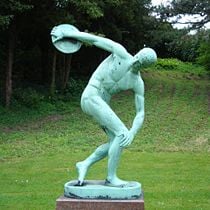
In a Corinthian culture that loved Olympic games, St. Paul uses an athletic analogy. If an Olympic athlete can exercise and work hard to win an event (and a crown of withered celery), how much harder should we work to preach the Gospel to others to earn an imperishable crown? (1 Cor 9:24-27). I don't have to do too much work to see how this applies to us today.

The study also addresses topics like: choosing a Vocation, the influence of the media, the Church’s teaching on contraception, the pursuit of holiness, developing the zeal to evangelize, and discerning our spiritual gifts among others.

Overall, the theme for the study on Corinthians is: What does it mean to live in the world, but not of it? We are a people set apart, but we are also called to engage the world and bring Christ to it. As our culture is beginning to look more and more like the pagan city of Corinth, my hope is that this Bible study can help students learn and live out the valuable insights of St. Paul.

(For an introduction to 1 Corinthians as a whole, check out  the study bible my friend, Mark Giszczak wrote.)

Thursday, January 6, 2011

Catholicism and Mormonism: Part 3 of 2

Ok, so I just wanted to add one more link about Mormonism.

Lisa and I watched the PBS Frontline special on Mormonism last week.

If you want a deeper picture of Mormonism, this is a great place to start. It consists of 2 parts, each 2 hours long.

You can also watch it online for free. Here is the link: http://www.pbs.org/mormons/

The program is on the right side.

Tuesday, January 4, 2011

Catholicism and Mormonism: When Mormons Come to Your Door Part 2


Part 2 of 2: A Brief Apologetic with Additional Resources

Because Mormons send out over 50,000 missionaries each year, there is a good chance that one of them has knocked at your door in the past. Being in the west, there is a much stronger presence of Mormons then when we were in Kansas. As I said before, since our neighbors are Mormon, we have had 3 or 4 sets of Mormon missionaries in our house for a total of 10 or more visits in the past year. So, what goes on when Mormons come to your door and how should you respond as a Catholic?


Step one: Invite them into your home. 


Your goal is to share with them the Catholic faith and why you are Catholic (assuming the person reading this is Catholic :) ) At times, we have felt like not having Mormon missionaries in our house, especially after having different missionaries into our home several times. But, I think it is important to talk to people about the faith whenever you have the opportunity, especially if they are willing to come to your front door! The missionaries that we have spoke to told us that they enter one home for about every 100 doors they knock on. They will be very excited if you invite them into your house. 


Step two: Let the missionaries explain themselves and tell you about Mormonism.


If they share with you about their faith, it is only natural for you to share why you believe what you believe as well. I always tell them that I am interested in the truth. If they have the truth, then I will accept it. This is a true statement even if I don’t believe they have the truth.
The goal of a Mormon missionary when they come to your door is to have you baptized in the Mormon Church. They beginning with the story of Joseph Smith and tell of the visions he received (for more on these read part 1). Essential to these visions is the idea that all Churches were false and that through the angel Moroni, God gave Joseph Smith  the Book of Mormon to restore the Church from falsehood.

So, how did the Church run into error? The Mormons believe in what they call the Great Apostasy. After the death of the last Apostle, they believe that no one had the authority to correctly teach the faith. Because of this, the Church slowly fell away from the teachings of Jesus and became corrupted. They will claim that the Protestant Reformation made some strides in coming back to the truth, but that the revelations of Joseph Smith and the Book of Mormon were needed to establish the true Church once again.

Step three: Explain the Catholic Faith


Overall, you goal is to be charitable, defend the Church from their attacks, give your testimony, and show why you believe that Joseph Smith is not a true prophet.


1. Be Charitable
Hopefully, this is easy. Invite them in. Give them something to drink and have a snack on hand. Most Mormon missionaries have never experienced Catholics who can articulate their faith and do so with hospitality. They might not remember anything we say, but my hope is that they remember what it was like to be in our home and how we treated them with respect. I honestly think this impacts them more than any arguments.

2. Defend the Church from their misunderstandings.
When they bring up the Great Apostasy, it is a good time to step in and explain what the Catholic Church believes. This should be your main topic. Ironically, Mormons and Catholics both have a very strong belief about Apostolic authority. Catholics believe that this line of authority started with the Apostles and continues today. Mormons believed it was discontinued until Joseph Smith and continues in their Church today. Mormons will tell you either Mormons or Catholics are the true Church because of this. The Great Apostasy is really the determining factor.

The missionaries will begin to use Scripture mainly from the New Testament to try to show that Jesus and the Apostles foretold of the Great Apostasy. Here are some verses they might use: Mt. 24:4-12; Mk.. 13:21-23; Lk. 21:7-8; Acts 20:29-30; 2 Thess. 2:1-12; 2 Tim. 3:1-7; 2 Tim. 4:1-4; 2 Pet. 2:1-3; and Jude 17-19.


Many of these verses talk about believers falling away from the faith. However, none of them speak to the entire Church falling away. Plus, if you read them in context, some of them don’t even apply whatsoever. The sharpest missionary who came to our house was the son of a Mormon seminary professor. After I refuted several of these verses, he finally admitted that none of them directly foretold of the Great Apostasy. 

Not only do their verses not prove the Great Apostasy, there are several Bible verses that are directly opposed to this idea.


I think the best two are the following:


Matthew 16:17-19
And Jesus answered him, "Blessed are you, Simon Bar-Jonah! For flesh and blood has not revealed this to you, but my Father who is in heaven. And I tell you, you are Peter, and on this rock I will build my church, and the powers of death shall not prevail against it. I will give you the keys of the kingdom of heaven, and whatever you bind on earth shall be bound in heaven, and whatever you loose on earth shall be loosed in heaven."


The gates of hell should not prevail over the Church. If the authority of the Church fell away after the last Apostle, then this statement is not true. The gates of hell did overcome the Church and reeked havoc for 1600 years.


John 14:16-18
I will ask the Father and He will send you another Advocate to be with you always, the Spirit of truth, which the world cannot accept, because it neither sees nor knows it. But you know it, because it remains with you, and will be in you. I will not leave you orphans.


How could we go into such darkness and falsehood with the Spirit of Truth?


Giving verses back-and-forth can only take you so far because Mormons do not look at Scripture the same way that Catholics and Protestants do. They are much more intent on trusting in the message of Joseph Smith and their conviction by the Holy Spirit about his message. I don’t think you should spend too much time on it, but I also think it is important to defend the Catholic Church.


3. Give Your Testimony
Testimony is very important for Mormons. They will almost always share their testimony with you--that they believe in Jesus Christ and that they know that the book of Mormon is true. I think it is important to share your testimony as well. It helps show that you are a person of faith that has been convicted of your beliefs. 


So, how do you give a testimony? Well, it doesn’t have to be anything elaborate or detailed. If you are a person of faith, chances are you had a point in your life when you made a definitive decision to practice your faith. Just tell them what your life was like before you made this decision, why you came to this decision, and what your life has been like with your faith (for instance, the power of the Eucharist in your life). Again, this doesn’t have to be elaborate. 


4. Was Joseph Smith a True Prophet?
No matter what the discussion is, a Mormon missionary will almost always end the conversation by asking you to read the book of Mormon and to see if the Holy Spirit convicts you that it is the word of God. The conviction will come in the form of a feeling.


A few problems with this:


1. Historians have shown that the Book of Mormon contains many verses from the King James Bible. So, the Book of Mormon will sound a lot like the word of God.


2. I would challenge the claim itself. Feelings are subjective. In fact, while I have used reason to back up my Catholic beliefs, I also have several feelings associated with it as well. How do we know that something as subjective as feelings and emotions prove something?


3. At no other time has a true prophet asked anyone to do this. In fact, in Galatians 1:6-8, St. Paul gives us a very clear way of knowing what messages to accept:


“I am astonished that you are so quickly deserting him who called you in the grace of Christ and turning to a different gospel -- not that there is another gospel, but there are some who trouble you and want to pervert the gospel of Christ. But even if we, or an angel from heaven, should preach to you a gospel contrary to that which we preached to you, let him be accursed” (italics  and bold mine).

So, is there anything in Mormonism that goes directly against the Gospel found in the New Testament? Yes, many things, but let’s focus on one: Polygamy and Eternal Marriages.

Polygamy is perhaps the Mormons most radical teaching. Key point here: The Mormons no longer practice Polygamy, but they do still believe in it. They only stopped practicing it because it was against the law. Also, attached to the teaching of polygamy is that to obtain the highest level of godhead one should practice polygamy and seal the marriage for time and eternity. 

Mormons will point to the Old Testament to show that God allowed polygamy in the past (Abraham, David, Solomon, etc.) I do not believe that these practice equal God’s approval, but it isn’t worth arguing with them on this point. (For instance, after Abraham takes up Hagar as a second wife, the next time God speaks to him, Abraham is circumcised. The punishment seems to fit the crime. Enough said.)
The best place to turn is Matthew 22:23-30:


“The same day Sadducees came to him, who say that there is no resurrection; and they asked him a question, saying, ‘Teacher, Moses said, “If a man dies, having no children, his brother must marry the widow, and raise up children for his brother.” Now there were seven brothers among us; the first married, and died, and having no children left his wife to his brother. So too the second and third, down to the seventh. After them all, the woman died. In the resurrection, therefore, to which of the seven will she be wife? For they all had her.’ But Jesus answered them, ‘You are wrong, because you know neither the scriptures nor the power of God. For in the resurrection they neither marry nor are given in marriage, but are like angels in heaven.’”

First, both Jesus and Sadducees makes the assumption that marriage ends with death.   This is why the woman in the story can marry someone else. Second, the question is who is she married to in heaven. Jesus’ answer, no one presumably because there is no marriage. This is made clear by the fact that they will be like angels, in so far as angel aren’t married.


The Mormons might respond that since Jews didn’t seal their marriages they wouldn’t be married in heaven. But, the overall point is that there is no marriage at all in heaven whether there is a sealing or not.

The question with this verses and several others comes down to this: Who do you believe in more Jesus or Joseph Smith? Whose word is greater Jesus’ or Joseph Smith’s? Ultimately, I believe the Mormons have to answer Joseph Smith (although they would never say this). Smith gave with a greater and more complete revelation. Smith built a restored Church that would not fall away. But, this doesn’t make any sense. Why is Smith more powerful and effective then God Himself?


Plus, Smith’s actions seem to demonstrate why he was not a prophet. Several things stand out, but his marriages are the most obvious. Not only did he have polygamous marriages, but he also married 10 women who were already married. This act of adultery comes directly against anything in the Old and New Testaments. (For a full list of wives go here.)

Again, while these are ad hominem attacks, the worth of a prophet is based on the character of his message and his personal character as well. Just remember to be forthright, but also charitable when explaining these points.

I tried to be brief as possible, but it is a hard thing to do. I feel like I have just touched on the surface of this topic. Feel free to shoot me a question on this if you have any.


Here are some great resources for more information:


Here is a great book online about Mormonism and here is a very helpful article by Patrick Madrid, a Catholic apologist, on Mormonism.

Saturday, January 1, 2011

Catholicism and Mormonism: When Mormons Come to Your Door

Part I of II: History, Stats, and Beliefs

Over the past year or so, Lisa and I have had several encounters with Mormon missionaries. We have neighbors who are very active in the Church of Jesus Christ and the Latter-Day Saints (LDS) and they seem to send missionaries our way. I wanted to take some time on the blog to give a little background on the Mormon Church (Part I--History, Stats, and Beliefs) and to briefly outline how to articulate the Catholic faith in the face of the message that Mormon missionaries deliver (Part II).
History:
The history of the Mormons begins with Joseph Smith. Smith was born in Vermont in the year 1805. Eventually, his family moves to rural upstate New York. In the year 1820, he claims that the personages of the Father and the Son appeared to him in an orange grove. Smith asks what Church is the true Church to which the personages reply, “none of them, for they were all wrong.” Then, in 1823, an angel by the name Moroni appears to him and reveals golden plates. Smith was unable to remove the plates for a four year period. After his marriage to his wife Emma, he is able to remove the plates. Smith translates them by using a seer stone and looking into the bottom of a hat without looking directly at the plate themselves. The angel Moroni would later take these plates back to heaven. 
The translation of these plates produced what we now have as the Book of Mormon: Another Testament of Jesus Christ. The Book of Mormon centers around the story that the lost tribes of Israel came to America. After his death, Jesus appears to this tribes and preaches the Gospel. Through this story, several new teachings appear that are not found in the Old or New Testament.

After the translation of the Book of Mormon, Joseph Smith forms what he believes is the only true Church. He spreads his message to family members and then to several others. He sets up several communities of believers, but each time the new Mormons are driven out of the area. In 1844, through an argument on the teaching on polygamy, Smith is thrown in jail and an angry mob murders him.
At this time, the Church splits. A few of the members follows Smith’s wife Emma and his son as the successor of the Church. This Church is called “The Reorganized Church of Jesus Christ of Latter-day Saints” or RLDS. The majority of the believers follow Brigham Young to Utah to form the The Church of Jesus Christ of Latter-Day Saints (LDS), also known as the Mormons. 

Stats on the LDS Church:
14,000,000 members worldwide 
Over 50,000 (!) Mormons serve an unpaid two year mission
One of the fastest growing religions in the world today

Some of Their Unique Beliefs:
Revelation: God’s Word continues even after the Old and New Testament. Not only is the Book of Mormon and other Scriptures introduced, but Mormons have an existing prophet that can speak on matters of faith on par with Scripture. 
Trinity: Mormons believe that Jesus Christ was like us at one point in time and eventually became God. Similarly, we can do the same and become gods as well. This is obviously much difference than the orthodox Christian stance on the Trinity and the difference between man and God. In fact, while Mormons baptize their members, the Catholic Church does not recognize this Baptism as valid.
Polygamy: Perhaps their most controversial view, early Mormons including Joseph Smith and Brigham Young practiced polygamy and later claimed it was a revelation from God. Joseph Smith also said that in order to ascend to the highest level of godhood, one needed to practice polygamy and seal a marriage for all of time and eternity. While members of the LDS Church do not practice polygamy today, they only do so because it is illegal. Because Joseph Smith’s covenant was an eternal one, it cannot be revoked. From my understanding, if polygamy were legal, then Mormons would assumably continue this practice.
There are many more unique beliefs of the Mormons, but I will stop there for now. Next time: How to respond as a Catholic when Mormons coming knocking at your door.

Monday, November 22, 2010

Verbum Domini: A Summary


Pope Benedict’s Apostolic Exhortation Verbum Domini
A Summary by Kevin Cotter

On November 11th, Pope Benedict released a document entitled Verbum Domini. Verbum Domini addresses the Word of God in the Life and Mission of the Church. It has been called the most important document on the Word of God since Vatican II’s Dei Verbum. I find this document to be of particular importance to the vision and mission of FOCUS and I wanted to take some time to summarize the document and pull out some valuable quotes that apply to the work of FOCUS. I expected the document to focus on the Word of God. While it certainly does this, I was happily surprised to see how much the document focused on the work of evangelization.

If you want to read the document yourself, you can find it here: http://www.vatican.va/holy_father/benedict_xvi/apost_exhortations/documents/hf_ben-xvi_exh_20100930_verbum-domini_en.pdf  (The link here is a great because it provides you with a book-like pdf that you can print out. This is much more reader friendly than most documents found on the Vatican website). I will also cite section numbers (rather than page numbers) so you can go to the document and read specific areas that might interest you.

Before I dive into the document, I want to give a little background. This document was created after the Bishop’s Synod in 2008 on the Word of God. A synod is a think-tank of sorts where Bishops from around the world gather to discuss an important issue in the life of the Church. (Note: The next synod in 2012 will take up the topic of the New Evangelization). After the synod, a document is created to properly communicate the results of the meeting. In this case, it took about two years. While the Bishops obviously contributed to much of the document, it is apparent that Pope Benedict had a great deal to do with it.

The document is broken up into three main sections (plus an introduction and conclusion):
  1. Verbum Dei--a more academic analysis of the Word of God found in Scripture and Tradition
  2. Verbum in Ecclesia--a look at how the Word of God influences the life of the Church
  3. Verbum Mundo--an examination of how the Word of God can be used to preach the Gospel to the world
I will break down the document by starting with the introduction and then by going through the three different sections followed by a conclusion.

Introduction
The introduction begins with some reflections on the overall theme of the document and some notes on the Synod itself.

Some quotes worth mentioning:

“I encourage all the faithful to renew their personal and communal encounter with Christ, the word of life made visible and to become his heralds” (no. 2).

“There is no greater priority than this: to enable the people of our time once more to encounter God” (no. 2).

The bishops placed the text of the Bible at the centre of the assembly, “in order to stress anew something we risk taking for granted in everyday life: the fact that God speaks and responds to our questions” (no. 4). 

Finally, the introduction ends with by announcing that the Prologue of John’s Gospel will be a constant reference throughout the document. The Word, in this Prologue, was with God from the beginning and comes to dwell among us. In a sense, this Prologue is a Scriptural meditation as you read through the document. 

Section One--Verbum Dei (The Word of God)
To begin this section, the Holy Father looks at the Word of God throughout Salvation History. The practice of Salvation History, looking at God’s plan of salvation throughout history, is mentioned seven times in the document. I always enjoy it when authors practice what they recommend. This won’t be the first time.

A few excerpts that stood out to me in this section:

“The Christian is not a ‘religion of the book’: Christianity is the religion of the word of God”, not of ‘a written and mute word, but of the incarnate and living Word” (no. 7).

My favorite quote of the entire document. It gives Jesus’ role in Salvation History a whole new meaning for me. This has Biblical scholar/musical genesis written all over it:

“Calling to mind these essential elements of our faith, we can contemplate the profound unity in Christ between creation, the new creation and all salvation history. The word of an author who expresses himself through the ‘symphony’ of creation. In this symphony one finds, at a certain point, what would be called in musical terms a ‘solo’, a theme entrusted to a single instrument or voice which is so important that the meaning of the entire work depends on it. This ‘solo’ is Jesus...The Son of Man recapitulates in himself earth and heaven, creation and the Creator, flesh and Spirit. He is the centre of the cosmos and of history, for in him converge without confusion the author and his work” (no. 13).

Then, there is a beautiful quote on Mary's relationship to Scripture: “Mary is the image of the Church in attentive hearing of the word of God, which took flesh in her. Mary also symbolizes openness to God and others; an active listening which interiorizes and assimilates, one in which the word becomes a way of life (no. 27).


Several quotes in this section seem to echo Hebrews 4:12: "For the word of God is living and active, sharper than any two-edged sword, piercing to the division of soul and spirit, of joints and marrow, and discerning the thoughts and intentions of the heart." The Word of God is not dead, but is alive and powerful. This will set up the other two sections as they will focus on how to live out the Word of God.

There are many more gems on Scripture in this section, but in an effort to not overwhelm, let’s continue through the rest of the document.

Section Two--Verbum in Ecclesia (The Word in the Church)
This section focuses on the role of Scripture in the life of the Church. In particular, it looks at Scripture's relationship to the liturgy. Don’t get me wrong; I enjoy the liturgy. But, for some reason, this section seems to address some very practical and specific areas that I did not find as engaging as the other two sections. This does not mean you might not enjoy it more. Here are a couple of sections I found notable for the Church in America.

There was a call to forgo giving generic and abstract homilies which obscure the directness of God’s Word (no. 59). When we fail to preach the Word of God, we either intentional avoid its message or do not proper use the power of God’s Word. Rather, the document stresses presenting Christ at the center of homilies.

The document also addresses Scripture and its relation to music. “Preference should be given to songs which are of clear biblical inspiration and which express, through the harmony of music and words, the beauty of God’s word. We would do well to make the most of those songs handed down to us by the Church’s tradition which respect this criterion. I think in particular of the importance of Gregorian chant” (no. 70). 

A common problem with music currently played in Church around the US is not only out of date modern music (70s and 80s), but also music that strays from Scripture and often addresses nature instead. Here is a call to move back to a tradition of Scripture-based music which gives the faithful another opportunity to encounter the Word of God during the liturgy. 

The document also added some practical notes for marriages and families. The Synod suggested that every family have a Bible and that it be kept in a worth place for reading and prayer (no. 85). It also stresses forming small communities of families, where common prayer and meditation on passages of Scripture can be cultivated.

Finally, of note, there is a great section on lectio divina (no. 87).

Section Three--Verbum Mundo (The Word in the World)
In terms of FOCUS, section three is by far the most important. The Word of God and the new evangelization take center stage in this section as the very mission of the Church. The title of this section is: “The Church’s Mission: To Proclaim the Word of God to the World.” Notice the proclamation of the Word of God is not one element of the mission or one piece of the mission but the mission of the Church. In a sense, this section appears to sum up many of the missionary documents we have seen in the past (Evangelii Nuntiandi and Redemptoris Missio) while taking them to a new level.

A quick note: It is easy to confuse what is meant by the new evangelization or mission ad gentes. The term new evangelization is often thrown around so much, we fail to grasp exactly what it means. The new evangelization and mission ad gentes both have specific audiences or situations in which evangelization occurs. The new evangelization is the situation where baptized Catholics "have lost a living sense of the faith." The mission ad gentes is where the Gospel is not known or mature Christian communities have not been formed. Here is a straightforward excerpt from John Paul II’s of Redemptoris Missio if you want to read more on this. Specifically read number 33.

Here are some notable excerpts from the third section of Verbum Domini:
“This is why the Church is missionary by her very nature. We cannot keep to ourselves the words of eternal life given to us in our encounter with Jesus Christ: they are meant for everyone, for every man and woman” (no. 91).

“The Synod of Bishops forcefully reaffirmed the need within the Church for a revival of the missionary consciousness present in the People of God from the beginning” (no. 92).

“The Synod reaffirmed that ‘the mission of proclaiming the word of God is the task of all of the disciples of Jesus Christ based on their Baptism’...A consciousness of this must be revived in every family, parish, community, association, and ecclesial movement. The Church, as a mystery of communion, is thus entirely missionary, and everyone, according to his or her proper state in life, is called to give an incisive contribution to the proclamation of Christ” (no. 94).

“At the dawn of the third millennium not only are there still many peoples who have not come to know the Good News (mission ad gentes), but also a great many Christians who need to have the word of God once more persuasively proclaimed to them, so that they can concretely experience the power of the Gospel. Many of our brothers and sisters are ‘baptized, but insufficiently evangelized (new evangelization)’ ” (no. 96) (remarks in parentheses are mine).

Four paragraphs that very specifically apply to FOCUS missionaries:
“The Synod paid particular attention to the proclamation of God’s word to the younger generation. Young people are already active members of the Church and they represent its future. Often we encounter in them a spontaneous openness to hearing the word of God and a sincere desire to know Jesus. Youth is a time when genuine and irrepresible questions arise about the meaning of life and the direction our own lives should take. Only God can give the true answer to these questions” (no. 104).


Evangelization on campus: “It is not a matter of preaching a word of consolation, but rather a word which disrupts, which calls to conversion and which opens the way to an encounter with the one through whom a new humanity flowers” (no. 93).

Bible Studies: “In a particular way, young people need to be introduced to the word of God ‘through encounter and authentic witness by adults, through the positive influence of friends and the great company of the ecclesial community” (no. 97). 

Discipleship: “Young people need witnesses and teachers who can walk with them, teaching them to love the Gospel and to share it, especially with their peers, and thus to become authentic and credible messengers” (no. 104).

If you are out of college and would like to live out this document, you can apply to be a FOCUS missionary here.

Conclusion
The conclusion continues the theme of the Word of God and the new evangelization:
“Our own time, then, must be increasingly marked by new hearing of God’s word and a new evangelization. Recovering the centrality of the divine word in the Christian life leads us to appreciate anew the deepest meaning of the forceful appeal of Pope John Paul II: to pursue the missio ad gentes and vigorously to embark upon the new evangelization, especially in those nations where the Gospel has been forgotten or meets with indifference as a result of widespread secularism” (no. 122).

The document closes in a very compelling and fitting way. Pope Benedict practices what he preaches by using the Word of God to take part in the mission ad gentes and the new evangelization:

“Finally, I turn to every man and woman, including those who have fallen away from the Church, who have left the faith or who have never heard the proclamation of salvation. To everyone the Lord says: ‘Behold, I stand at the door and knock; if anyone hears my voice and opens the doors, I will come in to him and eat with him, and he with me’ ” (Rev. 3:20) (no. 124). 


I will continue to read over the document and I am sure there is much more to discover. I highly recommend picking up the document yourself and reading it, especially the third section.  Feel free to post on what stood out to you.